


The Gul Plaza fire, as tragic as it is, was not a disaster but an audit of Karachi’s reluctance to govern a city.
A brutal, incandescent audit of how Karachi actually works.
Locked exits, blocked corridors, improvised wiring, and ignored inspections. None of this was hidden.
The fire did not expose incompetence; it merely extended a mirror. Karachi is a failed city. Every which way you look at it. It is a failure—an abomination.
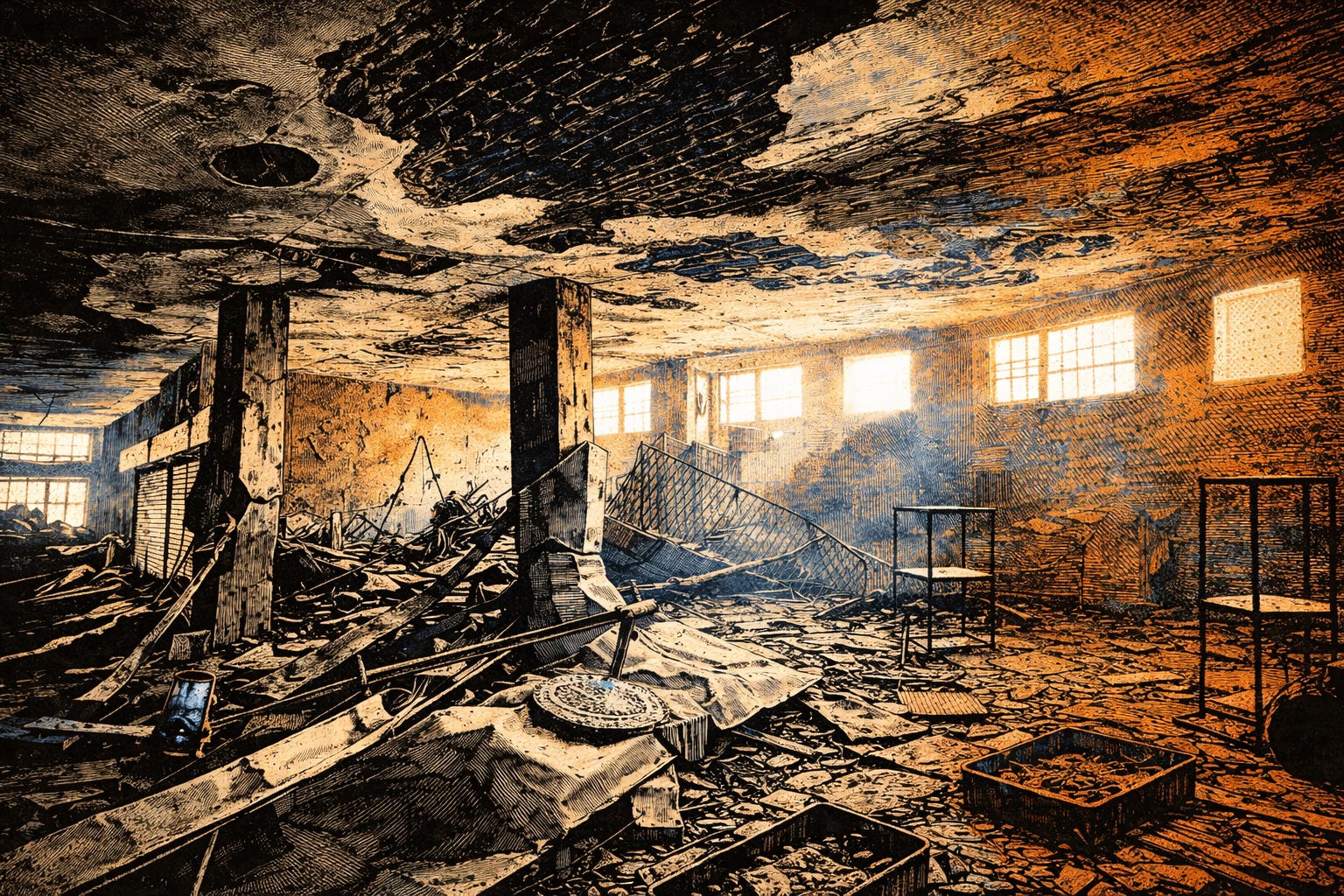
Gul Plaza burned because Karachi has normalized the idea that rules are decorative. Buildings grow the way coral does, layer by layer, exception by exception, until structure turns into suggestion.
Fire codes exist, but enforcement dissolves under pressure. Inspectors sign. Owners expand. Shoppers adapt. Everyone knows something is wrong, but everyone also knows that stopping would cost money, time, or influence. So the system teaches people to keep moving—inertia masquerading as pragmatism.
Then there are the exits. Locked, narrowed, repurposed. Theft was feared more than fire. Loss of inventory felt real. Loss of life felt abstract. I mean, that’s classic Karachi after all.
That hierarchy of concern tells you everything. Karachi plans obsessively to fail. It revels in catastrophe. The building was perfectly designed for a city that values control, commerce, and convenience above human life.
When the fire came, heroism rushed in to fill the vacuum left by planning—a bunch of suckers. Always come to save the day.
Firefighters climbed unstable floors. Rescuers worked through smoke that should never have existed in the first place. Their courage was real, and it mattered. But heroism here functioned as a coping mechanism for TikTok content creators sitting in far-flung countries, celebrating resilience they can’t spell.
It allowed the city to feel noble without feeling responsible. Without accepting failure as a community. Without remorse.
When systems rot, societies start outsourcing morality to sacrifice. Karachi is a basket case at this point.
What makes this harder to sit with is that everyone involved knew the ending in advance. Karachi has watched this movie before. Factories. Markets. Apartment blocks. Each time, inquiries are announced, reports are filed, and memory fades. The city absorbs the shock and returns to devouring. Not a single fuck given.
A place cannot keep improvising safety and expect survival. When neglect becomes the city’s pastime, disaster becomes policy.
At some point, reform language becomes dishonest. You do not fix this with another committee or a fresh set of laminated rules.
What needs to burn is not Gul Plaza, but the logic that built it. The informal deals. The casual violations. The quiet belief that collapse is just the price of doing business. It isn’t. Fire is always a risk, but no spreadsheet ever accounts for collective incompetence.
Karachi does not need sprinklers. It needs to burn. A controlled fire that clears out the entire moral architecture that treats human life as expendable inventory. Not literal flames. A harder, rarer kind. The kind that leaves nothing standing except what deserves to remain.
Karachi needs a restart. A reboot with new software. Not some torrented spyware, an actual built. OEM will do. The bar is so low.