

Missing Sam by Thrity Umrigar
Book review: Summary, Notes and My Take

In Missing Sam, Thrity Umrigar explores what happens to a marriage when one partner disappears and then returns carrying trauma that neither woman fully understands.
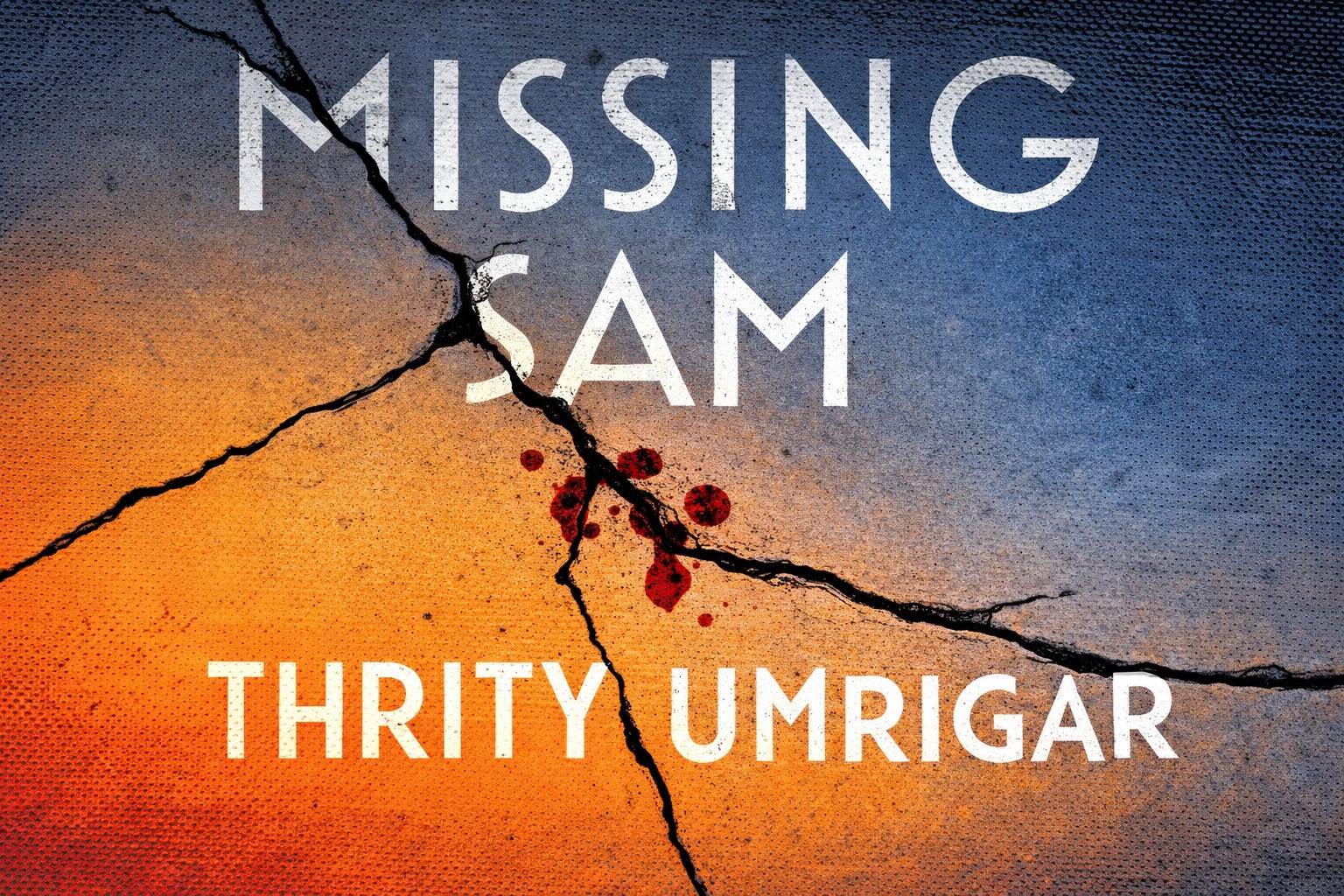
She focuses on a same sex couple, Aliya (Muslim Indian American) and Samantha (Catholic Irish American), and examines how fear, suspicion, and unspoken resentments shape their relationship before and after a violent crime.
Through their story, she asks how well we really know the people we love, and what it means to rebuild trust after betrayal, misunderstanding, and public scrutiny. She limits the narrative to the weeks surrounding Samantha’s disappearance and recovery, keeping the emotional lens tight on the couple and their immediate circle.
At its core, Umrigar tries to understand how trauma alters identity and how love survives when both partners feel isolated.
She structures the novel around alternating points of view between Aliya (Ali) and Samantha (Sam). She opens with Sam’s disappearance, placing the reader inside Ali’s fear and confusion as she deals with the police and with friends.
As the investigation unfolds, Umrigar gradually reveals details about the couple’s recent conflict, including jealousy and accusations of infidelity. Later sections tilt toward Sam’s experience after she is found alive, focusing on her physical injuries and psychological distress.
Throughout the book, Umrigar returns to the same key moments from different angles, allowing each woman’s interior life to reshape the reader’s understanding of what happened. She blends present-time scenes with memories and diary excerpts, using the police investigation and the couple’s conversations as vehicles to surface buried tensions. The structure keeps the mystery of the disappearance active while steadily deepening the emotional stakes.
Main Ideas Across the Work
Umrigar emphasizes how quickly suspicion can grow inside a marriage when communication breaks down.
She shows that trauma does not end with physical rescue but continues in the body and mind long after the event.
She highlights how public events, such as police questioning and media attention, intensify private marital strain.
She portrays jealousy not as a single outburst but as a pattern of insecurity that shapes everyday interactions.
She explores how same sex couples must navigate both ordinary marital problems and the added scrutiny of society.
She suggests that privacy and trust are closely linked, especially when one partner feels exposed by investigation or gossip.
The narrative repeatedly returns to the idea that memory is unreliable and filtered through emotion.
Umrigar shows how friends and family try to help, yet often misunderstand the depth of the couple’s situation.
She presents healing as uneven and nonlinear, marked by setbacks rather than steady progress.
She underscores that love alone is not enough unless both partners are willing to confront uncomfortable truths.
This novel can best be described as contemporary domestic suspense fiction, in which crime catalyzes an examination of intimate relationships. At the same time, Umrigar’s focus on a lesbian marriage places the work within a broader conversation about LGBTQ representation in mainstream literary fiction. In the wider literature on trauma narratives, her approach aligns with writers who center the survivor’s psychological experience rather than only the crime itself. The novel also participates in ongoing discussions about marriage, privacy, and the fragile boundary between public investigation and private life.
My Notes
This novel is less about solving a disappearance and more about what a disappearance reveals. The crime initiates the story, but the real focus is the marriage between Sam and Ali and the emotional fault lines that were already there.
Trauma, inherited family patterns, and social hostility press against their relationship from every direction. The book ultimately asks what survives after fear, pride, and shame have done their damage.
Patterns the Book Exposes
Across the novel, the investigation into Sam’s disappearance consistently exposes tension inside the marriage rather than simply generating suspense.
The police interviews reveal how much Ali wants their relationship to appear flawless, especially when she withholds the truth about their fight the night before Sam vanished.
In several places, Ali admits she wants their marriage not just to be equal to a straight one, but better, which creates a quiet pressure to perform stability.
The book repeatedly returns to inherited family baggage, showing how Sam’s father’s rage and Ali’s strict upbringing shape their arguments and misreadings of each other.
Moments of hostility from the outside world, such as the hateful note left on their porch, are treated as real but not sensational.
The crime itself unfolds procedurally, yet Sam’s anger toward the detective underscores that survival does not feel like a rescue.
After Sam returns, the loneliness Ali felt during her disappearance remains present, suggesting that trauma lingers even when the immediate danger is over.
The novel repeatedly shows how captivity reshapes Sam’s understanding of complicity, especially in her reassessment of her mother’s long endurance of her father’s moods.
Scenes of domestic tenderness, such as shared meals or quiet conversations, carry as much narrative weight as the search for the perpetrator.
Useful Contradictions
The novel contains a resolved crime, yet the emotional damage remains unresolved long after the perpetrator is caught.
Ali wants transparency from the police, yet she initially hides the truth about her fight with Sam.
Sam is furious that no one rescued her, yet she resists involving Ali in conversations with the detective.
The couple lives in a town described as hospitable to gay marriage, yet they still face hate speech and threats.
Signals
Trauma exposes what pride has been covering.
A marriage can be loving and still shaped by fear inherited from previous generations.
Being rescued is not the same as feeling saved.
Public acceptance does not eliminate private vulnerability.
Solving a crime does not repair what was broken before it happened.
One Quiet Question
If the danger disappears, but the fear remains, what does healing actually require?
My Take
Thrity Umrigar’s Missing Sam arrives at a time when domestic suspense often relies on shock and reversal. What makes this novel stand out is its focus not on the crime itself but on what the disappearance reveals.
The story examines how fear reveals underlying issues within a marriage with already quiet fractures. What stayed with me is how the narrative persistently avoids spectacle and repeatedly returns to the question: what remains when pride, shame, and inherited patterns have long been at work before a stranger's intervention?
The novel narrows its focus to Ali and Sam’s marriage rather than widening into a procedural chase. The alternating points of view keep shifting our understanding of what happened and what it meant. Police interviews, media attention, and neighborhood reactions create pressure, but the real tension lies in what Ali and Sam have not said to each other.
The fight the night before Sam disappears becomes less a plot twist and more a mirror. Jealousy, insecurity, and the need to appear solid under scrutiny surface in small admissions and withheld truths. After Sam is found, the narrative does not rush toward relief. Instead, it lingers in hospital rooms, strained conversations, and the uneasy recalibration of daily life. Scenes of shared meals and quiet exchanges carry as much weight as the search for the perpetrator, making it clear that the story is not about catching someone but about understanding what the marriage was before and what it can be after.
The patterns that emerge are subtle but consistent. Ali’s desire for her marriage to be not just equal to a straight one but better creates a quiet pressure to perform perfection. That pride becomes a kind of armor, and the disappearance cracks it. Sam’s captivity forces her to reassess her mother’s long endurance of her father’s moods, suggesting how easily family dynamics echo across generations. Hostility from the outside world, including the hateful note on their porch, is real but not melodramatic. Public acceptance proves fragile. The crime is solved, yet the loneliness Ali felt while Sam was missing does not evaporate. Being rescued does not feel the same as being saved. Trauma exposes what pride has been covering, and the novel keeps returning to that uncomfortable recognition.
The book's greatest strength lies in its focus on emotional aftermath. Umrigar recognizes that healing is uneven and that survival doesn't undo existing strains. The conflicts are intentional. Ali seeks transparency from the police but hides her own role, while Sam resents not being saved and resists sharing control of the investigation. These tensions feel authentically human rather than forced. Although the procedural parts sometimes seem more practical than engaging, the mystery itself is straightforward for those seeking complex twists. The novel prioritizes inner emotional work over surprise, thereby narrowing its scope but enhancing its emotional depth.
This is a book for readers who care more about how people live after a crisis than about how a crime is solved. It will resonate with those interested in marriage as an evolving negotiation shaped by family history, social pressure, and private fear. The lens it offers is steady and unsentimental. It leaves you thinking less about the perpetrator and more about the work that remains when danger passes, but unease lingers.
On my damage meter, this clocked in at 4. Gets under your skin.
Do you think the novel’s refusal to provide full emotional closure strengthens its realism, or does it risk leaving readers without the catharsis that domestic suspense typically promises?
I was particularly struck by your observation regarding Ali’s "pressure to perform stability." It’s a profound insight into the LGBTQ+ experience—the idea that a marriage must not only be "equal" but "better" to justify its existence to a judgmental world. By highlighting how this pride becomes a form of "armor" that actually prevents honest communication, you’ve identified the tragic irony of the book: the very thing Ali uses to protect the marriage is what makes it vulnerable to the fallout of the trauma. Your analysis moves far beyond a simple plot summary into a deep psychological study.
Since you noted that the procedural/mystery elements were straightforward and took a backseat to the emotional work, do you think the book would have been more or less effective if Sam’s disappearance had been a "false alarm" (e.g., she just walked away) rather than a violent crime? Or is the external "villain" necessary to force these two women to confront their internal shadows?