


It starts with something ordinary enough.
A shipment leaving port. Cotton bales stacked tightly in Karachi. Tea crates sealed in Colombo. Containers rolling out of Chittagong, filled with garments that already feel halfway exhausted before they arrive anywhere.
The movement looks like progress from a distance.
Goods in motion. Work completed. Value created. But something thin runs through the scene, like a draft you only notice when you stop moving.
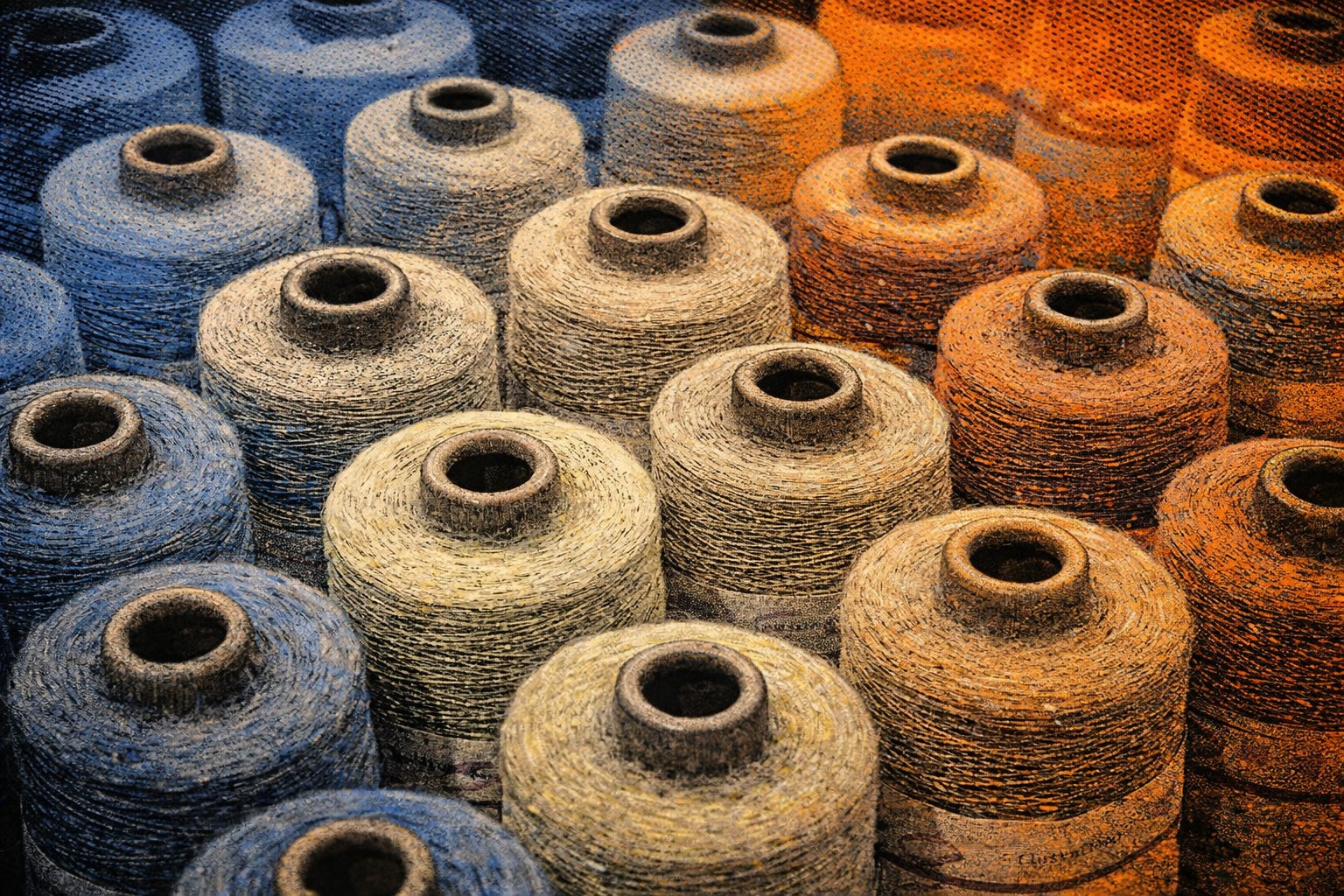
Pakistan exports cotton and yarn. India ships rice, tea, iron ore, and intermediate petroleum products. Bangladesh sends finished garments, but only after importing most of what makes them possible. Sri Lanka leans on tea and rubber, commodities whose prices are decided in rooms far away from the fields where they grow. Different products, same posture. Each economy stands at the beginning of the value chain, not the end.
This position carries a quiet constraint.
When you export raw or lightly processed goods, you sell the part of the product with the least bargaining power. Prices move against you without warning. Costs stay local. Profits drift outward. Development becomes conditional on demand you do not control. The story told in policy circles is that this is a phase—a necessary step. Start with raw materials, move up later. But later keeps slipping.
What makes the trap durable is how normal it feels.
Cotton is spoken of as if it belongs naturally in Pakistan’s fields, not in Pakistan’s factories. Tea is treated as Sri Lanka’s destiny rather than its inheritance. Bangladesh is praised for efficiency, even as efficiency is defined by how cheaply labor can be priced without breaking the system entirely. India, with its scale and diversity, escapes the worst caricatures, yet its commodity exports still anchor expectations about where value should stop accumulating.
None of this requires a conspiracy to function. It works because the rules were written when these countries had little say in writing them.
Raw materials are priced globally. Finished goods are branded locally. Risk is socialized downward. Margin flows upward. Once established, the arrangement defends itself through habit. Through trade logic that sounds neutral. Through the suggestion that this is how economies mature.
But if you sit with it long enough, the imbalance becomes hard to ignore. The raw material is not incidental.
Without cotton, there is no garment. Without tea leaves, there is no brand. Without rubber, no tire. The foundation is treated as cheap precisely because it cannot walk away on its own. That is the trap. Not poverty, not lack of effort, but being locked into selling the indispensable at a discount.