


Wars are always fought twice. Once in the planning, and once in reality.
The planning war is clean. The targets are hardened. The enemy collapses under the weight of precision and will. The population, tired of its rulers, does not rally to them. The second war, the real one, tends to happen without the permission of the first.
Operation Epic Fury launched on the morning of February 28, 2026. By afternoon, an elementary school in Minab, in Iran’s southern Hormozgan province, had been struck by a Tomahawk. The school was called Shajareh Tayyebeh. The Good Tree. It sat adjacent to a Revolutionary Guard naval complex.
Iranian authorities put the final death toll at 165 people, most of them girls between the ages of seven and twelve, according to Al Jazeera.
This is not ordinary political disappointment. The operation went badly in precisely the ways that were always possible, in the gaps between the map and the territory, in the spaces planners had smoothed over. The gap between the war we imagined and the one we got is a failure of imagination disciplined by institutional incentive.
Tanker traffic through the Strait of Hormuz dropped from an average of 24 vessels per day to just four within the first twenty-four hours of the strikes. Iran achieved this with cheap drones, producing an insurance-driven shutdown that caught the White House off guard.
Major marine war risk providers canceled coverage for vessels in the Persian Gulf. Shipping giants suspended operations. An adversary with a fraction of American military capability closed the world’s most consequential energy corridor by making the insurance math impossible. The planners anticipated a naval confrontation but they got a spreadsheet problem.
Qatar halted LNG production at its two main facilities after Iranian attacks. European natural gas futures jumped around 30%. Gas prices at American pumps moved in a week by more than they typically move in months. The Fed cannot cut rates because oil is driving inflation. The Atlanta Fed’s GDP estimate fell nearly a full point in four days.
And this is the part that doesn’t resolve into narrative. Because the premise of the operation was partly strategic, or so we were told.
Decade Iran’s military capacity, remove its leadership, allow the population’s suppressed dissent to find expression without the regime’s boot on its neck. Easier said than done.
The January 2026 protests had been the largest since the Islamic Revolution, with security forces killing thousands of demonstrators amid chants of “Death to the Dictator.”
The logic was not unreasonable. It was wrong. The protests that followed the strikes were nowhere near the scale of the January uprising. A bombed country does not immediately become a liberated one. Think, Iraq.
Then, yesterday, the Assembly of Experts announced Mojtaba Khamenei, the assassinated supreme leader’s second son, as Iran’s new supreme leader.
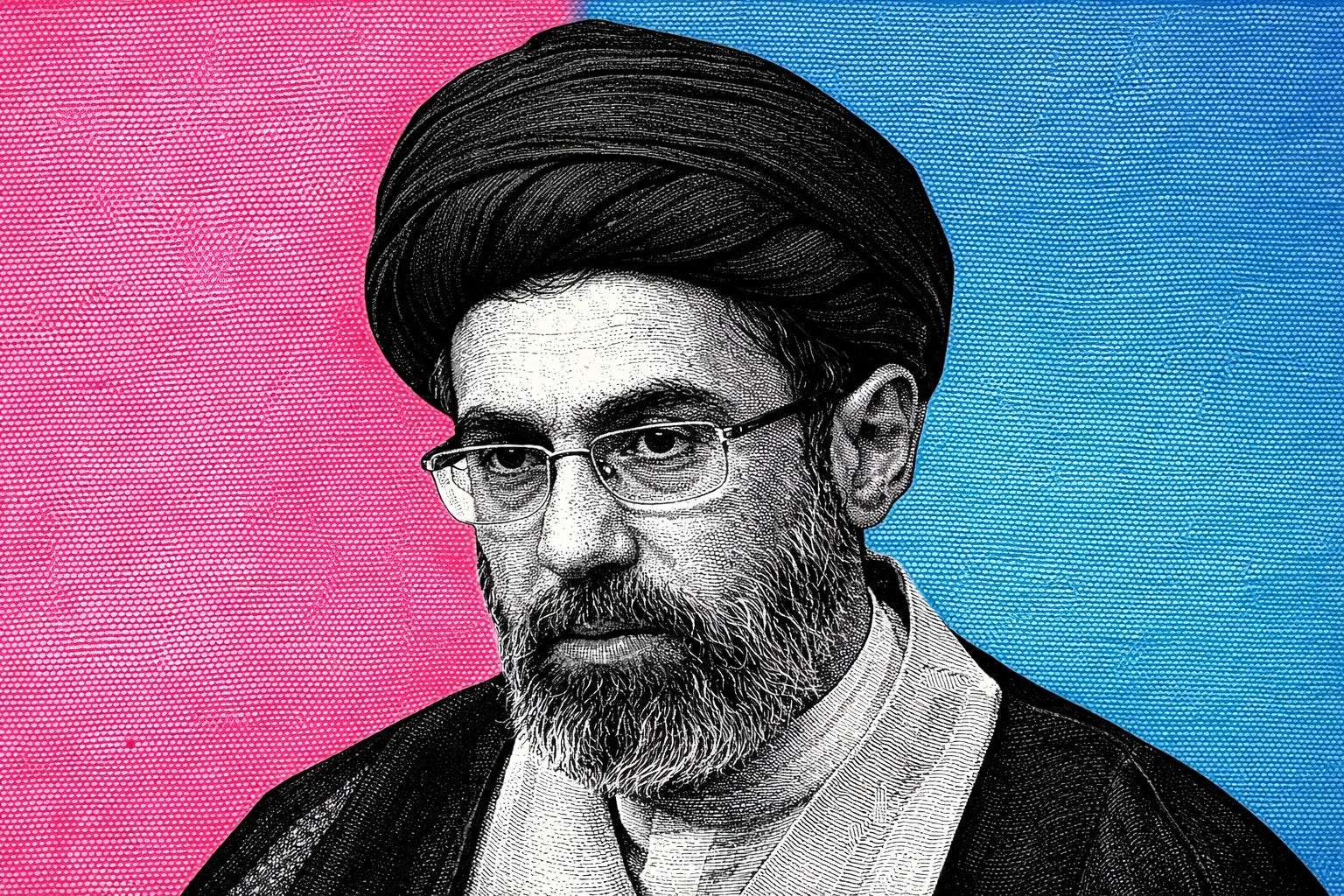
He is expected to be more hardline than his father, with close ties to the ideologically extremist clerics who led the regime’s most violent crackdowns.
Trump had called him “unacceptable” and suggested he wanted to be involved in selecting Iran’s new leader. The clerical body selected Mojtaba Khamenei anyway. The operation designed to end the Khamenei dynasty produced a Khamenei dynasty.
This is how worst-case cascade events work. They arrive disguised as complications, manageable friction, individual setbacks. The school strike is under investigation. The Strait disruption is being addressed by naval escorts. The new supreme leader is, according to Trump, a lightweight. The GDP deceleration is partly tariff-driven. Every item on the list has a press conference answer. And the list keeps growing.
The situationship did not behave the way the model required it to behave. A planning assumption failed. And because it failed at the level of assumption rather than execution, no tactical improvisation resolves it. You cannot bomb your way out of an insurance-driven shipping shutdown. You cannot drone-strike your way to a successor government. You cannot manage inflation expectations while the price of diesel is a function of whether a 56-year-old hardline cleric in an undisclosed location decides to let ships through a 21-mile passage.
What is visible now is the architecture of the planning error. The operation was designed for a war against a state. The war that arrived was against a network of effects, cascading from a strait through tanker insurance markets through Gulf energy infrastructure into the Fed’s rate calculus and the price of gas in Ohio. The adversary was not a government that could be decapitated. It was a system of dependencies that Iran had spent four decades learning to make expensive to disturb.
The possibility of exactly this outcome existed in open before the first bomb fell. The Council on Foreign Relations published, weeks before the strikes, an explicit warning that military action was likely to rally support around the regime. Energy economists had war-gamed the insurance-driven shutdown. The January protests had already demonstrated that the regime, despite its unpopularity, retained its coercive machinery. None of this was hidden. All of it was known. The operation proceeded on the assumption that it would proceed differently.
The gap between the war we imagined and the one we got is not closing. The new supreme leader has been declared unacceptable. Israel has vowed to treat any declared successor as a target. The logic of escalation has its own momentum. The next planning assumption is already being made. It is already wrong in ways that are knowable and known.
The second war has been going ten days. The first one is still being briefed.