


Ramadan Mubarak.
For some people, it arrives with cannon blasts, neon grocery aisles, and traffic that doubles after sunset. For others, it slips in quietly between conference calls and freeway exits, marked only by a faint headache at 3 p.m.
There is a specific dislocation that third culture kids recognize without naming. You were born somewhere. You were shaped somewhere else. You now live in a third place that does not share the reflexes of the first two. Ramadan exposes that layering more clearly than any other time of year.
In Dubai, the month can feel theatrical in the best sense. The entire city tilts toward sunset. Work hours are shortened. Restaurants hide behind curtains during the day and explode into light at night. You break your fast with friends, drift toward a cricket pitch, linger at hookah lounges, and socialize until the sky softens again before Fajr. Everything acknowledges what is happening.
The point is not the hookah or the cricket. It is the synchronization. Everyone waits together. Everyone eats together. The city holds you in the ritual. You do not need to explain why you are tired at noon. You do not need to negotiate your schedule. The month feels expansive because it is reinforced at every turn.
Move to California, and the synchronization disappears. Ramadan becomes invisible. The grocery store sells nothing special. Coworkers schedule lunch meetings. Traffic behaves exactly as it did in February. Sunset arrives quietly while someone next to you orders a sandwich.
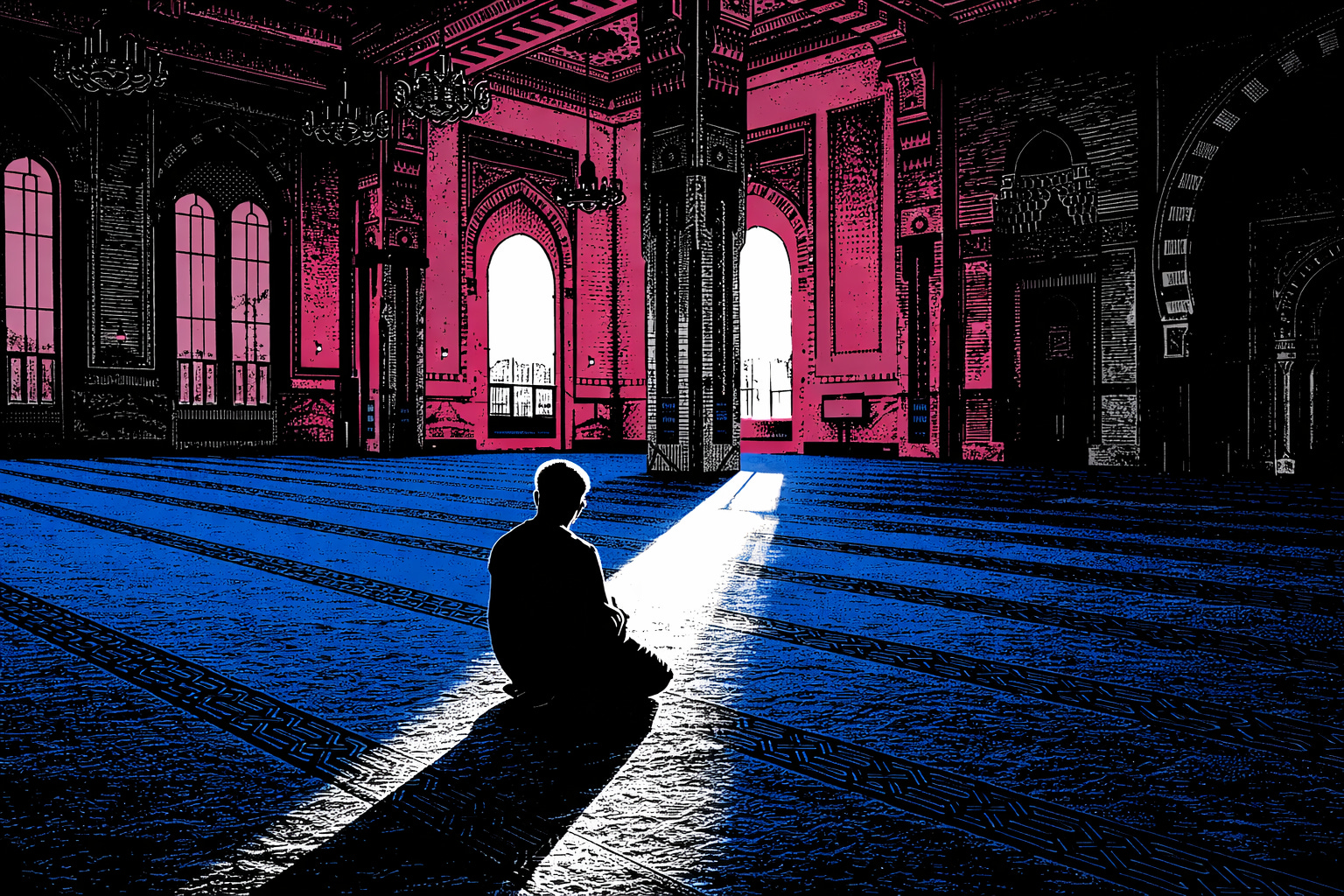
You break your fast alone more often. You drive home instead of walking into a courtyard full of noise. You pray in a bedroom instead of a mosque that spills into the street—the month contracts into your own body. The ritual shrinks.
That contraction changes the meaning of the practice.
When Ramadan is part of a communal spectacle, it feels generous and social. The hunger carries a sense of shared endurance. The night feels long and elastic. The memories attach to faces and places. It becomes a season.
When Ramadan exists inside a secular environment, it becomes private. Hunger turns inward. Time feels sharper. You measure the day by your own will rather than by the city’s rhythm. The fast stops being festive and starts being deliberate.
Many people interpret this as a loss. They talk about loneliness. They miss the noise. They miss the effortless belonging. The nostalgia becomes the primary emotion. I am one of them.
Something else happens underneath that nostalgia.
In a place where Ramadan structures the public sphere, participation requires little explanation. The culture does the announcing for you. In a place where it does not, you must choose the ritual daily without reinforcement. You must hold the intention without applause. You must construct the month in an environment that does not recognize it.
The fast becomes less about the environment and more about interior alignment.
Communal Ramadan distributes the weight across a city. Solitary Ramadan concentrates it in a person. It feels precise.
When the month loses its social scaffolding, what remains is the core act. You abstain. You wait. You break the fast. You repeat. The ritual strips down to its essentials.
In a city built around Ramadan, the month feels like belonging. In a city that ignores it, the month feels like a witness. You move through the day carrying something invisible. No one adjusts for it. No one announces it. The practice exists because you insist that it does.
Ramadan in Dubai felt like a celebration that held you. Ramadan in California feels like a discipline you hold yourself to.