


It starts late. Later than most places are open for coffee. The chairs are still full, the lights warm instead of bright, the sound level just loud enough to feel occupied without being intrusive. No one is rushing. No one is hovering over a phone waiting for a bartender’s attention. People sit, talk, drift, return. The night feels usable again.
For a long time, American cities outsourced togetherness to alcohol. If you wanted to linger, to meet someone, to be out without purpose, you were expected to drink. It became so normal that we stopped noticing who it quietly pushed out. Families. Practicing Muslims. People who did not want their social life routed through intoxication. Gen Z. There’s a long list.
We accepted this as urban adulthood, even though it was a narrow version of it.
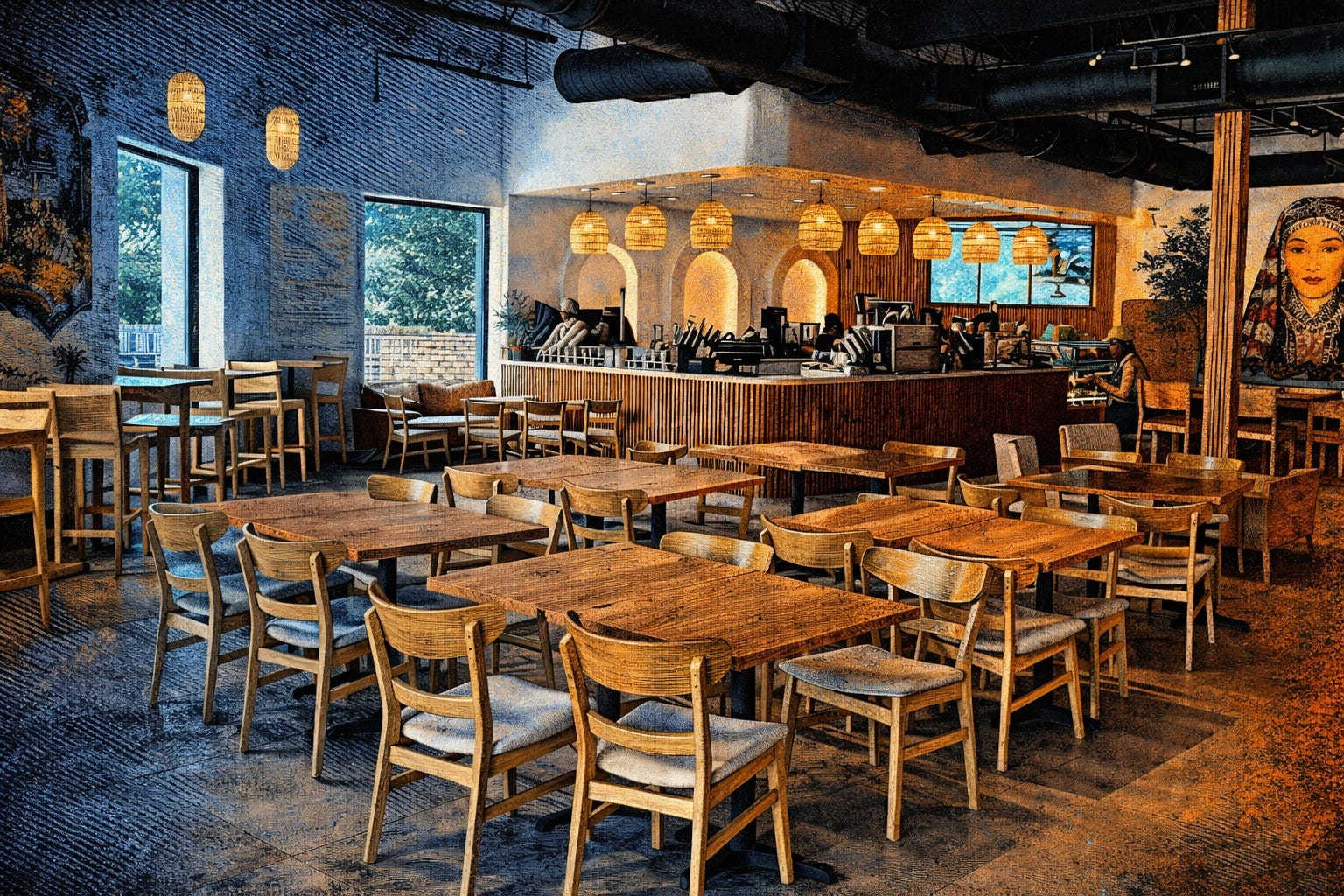
The Yemeni café does something almost subversive by doing very little. It stays open. It welcomes lingering. It does not reward speed. It treats presence as the point. Coffee and chai are not the attraction so much as the permission they grant. You can sit here for hours, and no one will ask what you are doing. The business model assumes that community is not a threat to profit, but a condition for it.
These spaces are deeply rooted in a specific culture, yet they feel broadly relieving. They serve Muslim communities in ways mosques cannot, and they serve non Muslims without explanation or translation. They feel intentional without being exclusive. In trying to build something familiar for themselves, Yemeni owners stumbled into solving a civic problem American cities had stopped trying to fix.
When you leave one of these places late at night, the city feels different. Less hostile. Less rushed. You realize how rare it has become to be somewhere that does not ask you to perform or consume beyond the bare minimum.