


In Ill Fares the Land, Tony Judt sets out to explain why contemporary Western societies feel socially brittle, politically shallow, and morally uncertain despite material wealth.
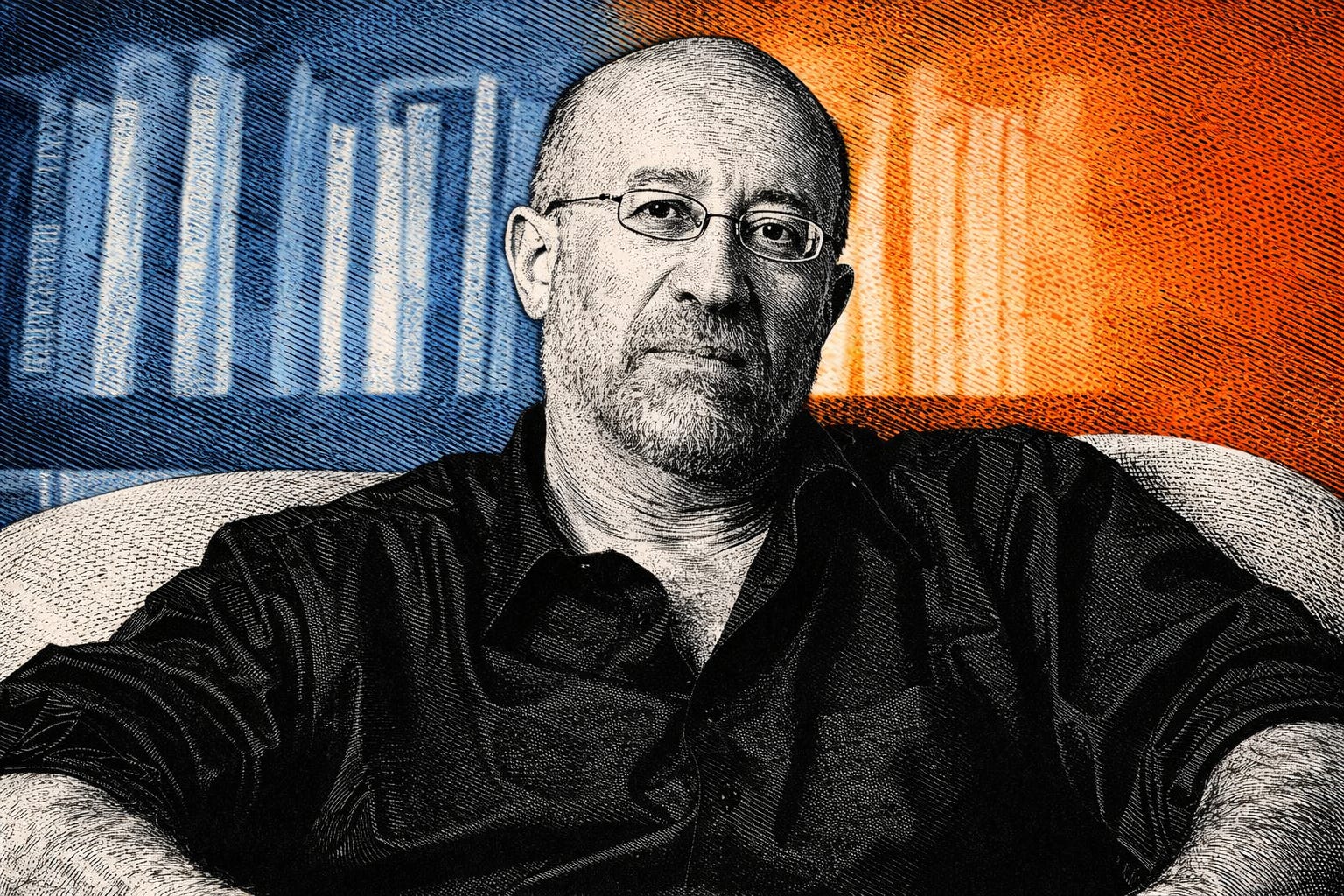
Judt is trying to understand how rising inequality, the retreat of public institutions, and the dominance of market thinking have reshaped everyday life in the US and Europe.
He argues that this condition is not accidental or inevitable but the result of political and intellectual choices made since the late twentieth century. He limits his focus to rich democracies, especially Britain and the United States, while drawing constant contrasts with postwar Europe.
Judt organizes the argument thematically rather than chronologically, moving between history, political economy, and moral reflection.
He opens by diagnosing inequality as a social and psychological problem, not merely an economic one, using comparative data to show its effects on health, trust, and social cohesion. Later sections shift toward the intellectual history behind market fundamentalism, tracing how ideas from economics were simplified and turned into governing dogma. Throughout, Judt returns to concrete examples such as privatized railways, welfare contracting, and financial deregulation to show how abstract ideas translate into lived consequences.
He repeatedly contrasts Anglo-American choices with European welfare-state models to clarify what alternatives have existed in practice. The book closes by arguing for the recovery of moral language in politics rather than technical fixes alone.
Main Ideas Across the Book
Judt argues that inequality corrodes social trust and produces predictable pathologies, regardless of how wealthy a society is in aggregate.
He emphasizes that market outcomes are treated as morally neutral even when they generate obvious social harm.
The author shows how privatization often shifts responsibility without improving services, while weakening the idea of public obligation.
He argues that many public services cannot function properly when judged only by profitability or efficiency metrics.
Judt traces the dominance of market language to earlier economic debates that were later stripped of context and nuance.
He stresses that postwar social democracy was not utopian but a pragmatic response to historical catastrophe.
The author argues that the collapse of communism left the political left intellectually disoriented rather than triumphant.
He highlights how the state has shrunk in social responsibility while expanding in surveillance and coercive power.
Judt insists that politics cannot function without shared moral assumptions about fairness and mutual responsibility.
He argues that societies become habituated to inequality and come to see it as natural once it persists long enough.
This book sits within the tradition of postwar social democratic thought concerned with inequality, public goods, and the moral limits of markets.
Judt’s approach aligns with European political economy and historical sociology rather than technical economics. The book participates in debates about neoliberalism, welfare-state retrenchment, and the legacy of the post-1945 settlement. It stands alongside works that seek to reintroduce ethical language into political discussion without reverting to revolutionary or deterministic frameworks.
My Notes
The book is about how moral language quietly disappeared from public life and was replaced by economic accounting.
Judt is not nostalgic for a perfect past, but alarmed by how easily societies accept inequality, privatization, and fear once they stop naming them as problems. He argues that social democracy mattered not because it was ideal, but because it built trust, shared purpose, and public goods inside capitalism. The danger is not ideological defeat, but moral amnesia.
Patterns the Book Exposes
Across the highlights, Judt keeps returning to the idea that societies decay when they reduce value to price and worth to profit.
The text repeatedly contrasts liberal tolerance with social democratic responsibility, stressing that freedom without collective obligation hollowed itself out.
Inequality appears not as a side effect of growth, but as a primary driver of social breakdown, fear, and mistrust.
The book circles the idea that trust is the invisible infrastructure of functioning states, and once lost, almost nothing works properly again.
Judt repeatedly points out how taxation reveals moral assumptions about mutual obligation, fairness, and time across generations.
The erosion of public space shows up again and again, whether through privatization, outsourced governance, or withdrawal into private life.
Fear is treated as the dominant political fuel of the present, replacing hope, solidarity, or shared ambition.
The highlights suggest that political language became thinner as responsibility shifted from public institutions to markets.
Judt consistently frames social democracy as a practical compromise rather than a utopian project, which is precisely why it worked.
There is a recurring warning that people adapt frighteningly well to unjust conditions once they are normalized.
Useful Contradictions
The book defends collective action while acknowledging that cultural and economic diversity can weaken social trust.
Judt criticizes economistic thinking while relying heavily on economic outcomes to demonstrate moral failure.
He rejects nostalgia, yet repeatedly relies on mid-20th-century arrangements as the reference point for what worked.
The state is presented as both indispensable and dangerously hollowed out by its own delegation of power.
Signals
When societies stop naming moral problems, they begin managing them instead.
Trust is easier to destroy than to rebuild, and markets do not generate it on their own.
Inequality does not merely offend fairness; it corrodes cooperation.
Privatization shifts responsibility without eliminating obligation.
Fear becomes politically useful when causes are vague and solutions feel distant.
People can adjust to almost any condition once it is widely accepted.
One Quiet Question
What do we still believe the state is for, now that we have trained ourselves to distrust it?
My Take
Ill Fares the Land begins from a refusal that feels almost impolite today.
Judt will not accept inequality as the price of growth, fear as political realism, or privatization as neutral modernization. He writes because public life has learned to speak fluently about costs while forgetting how to talk about consequences.
The book is not motivated by nostalgia or ideology, but by alarm.
Alarm that societies can become materially richer while growing socially thinner, and that this thinning can pass without argument once moral language slips out of use.
“We know what things cost but have no idea what they are worth.”
The work unfolds thematically, circling its subject rather than marching through it.
Judt moves between history, political economy, and moral reflection, showing how ideas about markets hardened into governing assumptions.
Inequality is treated as a social force that reshapes trust, health, and cooperation, not as an unfortunate but tolerable byproduct. Privatization appears not as a technical reform but as a transfer of responsibility that weakens public obligation without removing demand.
Throughout, Judt contrasts Anglo-American choices with European social democratic arrangements to make a simple point. Alternatives existed, functioned, and were later dismantled by choice rather than inevitability.
What the book reveals most clearly is how central trust is to any functioning society, and how casually it can be spent.
“There is quite a lot of evidence that people trust other people more if they have a lot in common with them: not just religion or language but also income. The more equal a society, the greater the trust.”
Judt keeps returning to the idea that markets do not create trust. They rely on it. Once inequality deepens, cooperation frays long before open conflict appears. As moral vocabulary retreats, politics becomes managerial and evasive. Problems are no longer named; they are only administered. Fear takes over because it thrives in vagueness and rewards deferral.
One of the book’s most unsettling insights is how quickly people adapt to unjust conditions once those conditions are stabilized, explained, and repeated often enough to feel natural.
Judt’s argument is careful but not seamless.
He rejects nostalgia while repeatedly leaning on the postwar settlement as proof that shared obligation can coexist with capitalism. He criticizes economistic thinking while relying on economic outcomes to demonstrate moral failure. He defends collective action while acknowledging that diversity and fragmentation strain trust, without fully resolving how plural societies rebuild shared commitments.
The state appears as both essential and hollowed out, diminished by its own habit of outsourcing responsibility while retaining surveillance and coercion. These tensions do not weaken the book so much as expose the difficulty of the problem it is trying to name.
This book is for readers who feel that contemporary politics sounds wrong even when it claims success. It is not for those looking for programs, roadmaps, or revived ideologies.
What Judt offers instead is a recovered way of seeing.
After reading, it becomes harder to accept talk of efficiency, reform, or growth without asking what kind of society those goals quietly assume.
The lasting effect is not persuasion but reorientation. The book leaves you listening differently, more alert to what disappears when moral questions are treated as accounting errors, and more aware of how much has already been lost simply because no one insisted on naming it.
Judt published his work in 2010. But he predicted the rise of Zohran Mamdani. Or at least someone who knows where capitalism stops and socialism works.
On my damage meter, this clocked at 4. Gets under your skin.