

They stopped apologizing and started curating

The first thing you notice is that nothing feels accidental.
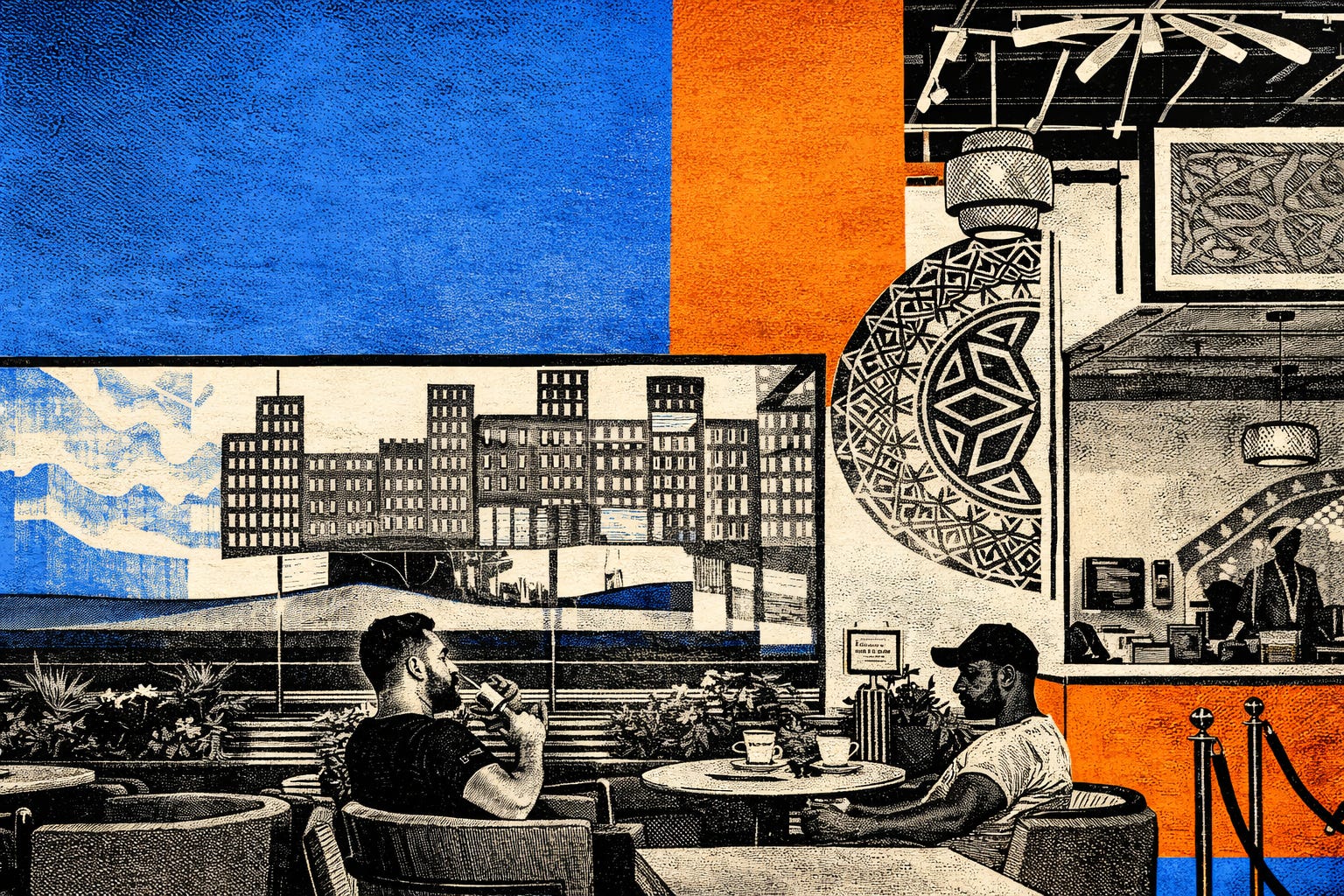
The lighting is warm but deliberate. The arches echo somewhere older than the strip mall outside. Even the cups feel chosen. Not flashy but intentional. The space does not ask for patience or forgiveness. It simply exists, fully formed, albeit a little overpriced.
Welcome to Yemeni Coffee Shop.
For a long time, immigrant businesses optimized for survival.
Bright lights. Fast turnover. Neutral aesthetics meant to offend no one and impress no one—function over feeling. The message was implicit: we are here to work, not to be seen. Thank you, come again.
Culture stayed in the back room, or at home, or in memory. Public space belonged to someone else. Yemeni coffee shops reverse that logic without announcing it by treating aesthetics as infrastructure.
Design becomes a form of authorship. This is not nostalgia packaged for outsiders. Sure, it can be argued it is. But to me, it’s this familiarity arranged for a new kind of third spaces. The arches, the patterns, the music, and the pacing all say the same thing. We know who we are, and we expect the room to reflect it.
And the quiet tension is hard to overlook. These cafés feel welcoming, but they do not bend themselves into universality. They resist the idea that inclusion requires dilution. That confidence changes the social dynamic.
Customers are not guests being accommodated. They are participants entering a world with its own rhythm. The power lies in how little the space needs to explain itself. It’s basically, if you know, you know.
You leave feeling like the needle has smudged, even if the naked eye doesn’t register. Not only in taste and design, but also in posture. When a community stops building only to survive and starts building to endure, the room changes. The chairs hold weight. The walls carry intention. The space stops asking permission and starts setting terms.